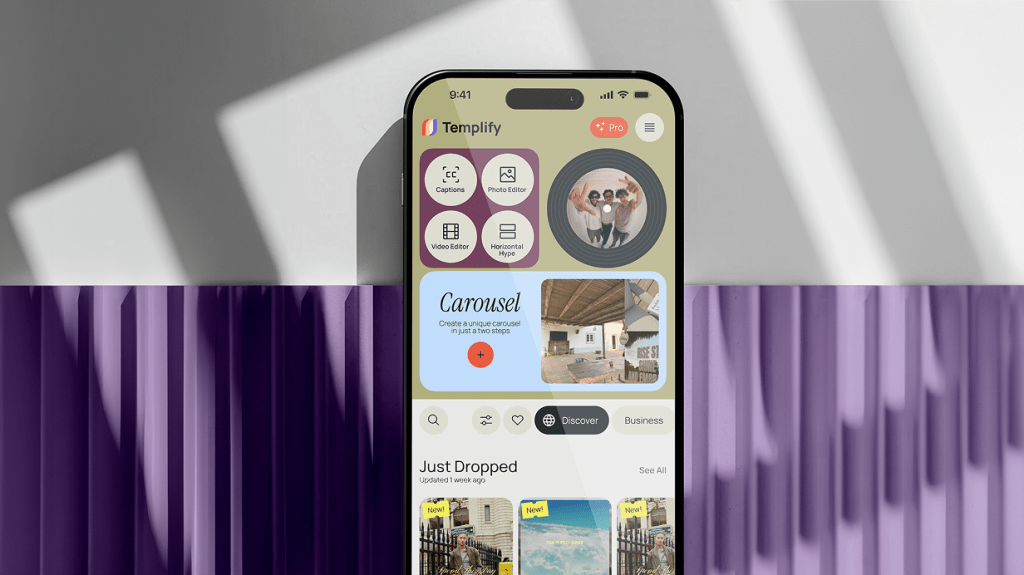
How Templify automated nearly half of customer support and cut tooling costs by 89%.
AI-native customer support and automated subscription management. 89% reduction in tooling costs, 48% of tickets fully automated, and 5.900% faster response times.


These are the shifts that show up once the pipeline is doing the work.
CI/CD and automated testing shorten the path from finished code to production, so shipping stops waiting on a release window.
Manual builds and hand-run checks stretch that path, and finished features sit unreleased for weeks.
Standardized pipelines and repeatable environments make every deployment look the same, so releases behave the way the last one did.
Ad hoc deployments depend on who runs them, and environment gaps turn into production incidents.
DevOps automation services take over provisioning, configuration and routine operations, freeing engineers to work on the product.
Without that automation, senior engineers spend the week on repeat tasks a workflow could handle unattended.
Infrastructure as code and container orchestration make environments easy to provision and reproduce when demand grows quickly.
Hand-built infrastructure resists change, and scaling it turns into a rebuild nobody planned or budgeted for.
DevSecOps builds access control and vulnerability checks into the delivery process, so security travels with the code.
Security bolted on after development finds problems late, when fixing them costs the most time and money.
DevOps services add monitoring and alerting across applications and infrastructure, so problems surface before users report them.
Teams running blind learn about outages from customers, and diagnosis starts from scratch every time.
Audit of current infrastructure, tooling, and operations; bottleneck and risk analysis; prioritized DevOps roadmap; scope and estimate for DevOps professional services.
Automated build and test pipelines; release validation and approval steps, automated deployment to every environment; rollback and post-release monitoring
Environments defined and versioned in code; version control for every infrastructure change; repeatable staging and production setups, rollback to a known good state
Security checks inside the delivery process; access control and secrets management; vulnerability scanning on every build; policy enforcement before release
Independent, loosely coupled services; separate development and deployment per service; clean integration between existing systems; easier scaling of individual components
Isolated environments for applications and services; portable deployment across development and production; container orchestration and scaling, cloud-native DevOps services on any provider
Our DevOps services run from early-stage build and release automation to full-scale cloud infrastructure management. The DevOps engagements below are the ones we can show.
AI-native customer support and automated subscription management. 89% reduction in tooling costs, 48% of tickets fully automated, and 5.900% faster response times.
AI orchestration across customer support, content moderation, and ops. Same business outcomes, 58% smaller team, fully documented handover.
AI-augmented engineering practice across architecture, code generation, testing, and review. Faster delivery on a smaller team, in a regulated healthcare environment.
Engineering velocity overhaul on a legacy codebase: AI-augmented development workflow, automated QA, and refactored architecture. Real AI in the build process — not in the pitch deck.
Describe your current setup, the pain points, and your timeline. Someone senior reviews it and comes back within one business day with a scoped response: what we would fix first, roughly what it takes, and what to watch out for.
Ekreative runs that review as a free audit. No obligation, and no long call needed to get a useful first answer.
That is what the senior engineering time behind your scoped response is worth. It costs you nothing, whether you hire us or not.
Our DevOps services adapt to the rules, release cadence, and uptime demands your industry already lives with.
Compliant, reliable infrastructure for systems handling patient data under clinical uptime requirements.
Release automation that survives traffic peaks, seasonal load, and frequent catalog changes.
Dental equipment commerce platforms that update without interrupting orders, checkout, or catalog access.
Consumer platforms shipping often, with infrastructure sized to unpredictable subscriber activity.
Auditable, automated deployment pipelines for systems under regulatory scrutiny and mandatory change control.
Modern delivery around legacy policy and claims systems, with full change history retained.
Plant and logistics software where an outage halts production lines, not just users.
Field and dispatch systems where a release cannot strand technicians mid-shift or lose their completed jobs.
We build with the CI/CD tools your engineers already use — Azure DevOps, GitHub Actions, GitLab — alongside containerization platforms, IaC frameworks and monitoring tools, on AWS, Google Cloud or Azure.
Picking a DevOps services partner is a due-diligence exercise. These four answers cover what most technical leaders want to know before they commit.
We look for repetitive, error-prone manual processes across builds, testing, infrastructure and deployment. Those get replaced with controlled automation where it fits, and everything else stays exactly as your team runs it today.
Your existing development stack, infrastructure, cloud environment, and workflows set the starting point. Ekreative does not force every company into one DevOps toolchain, because tooling your engineers already know costs less to adopt.
Access, configuration, pipelines, secrets, monitoring, and automated checks are treated as part of delivery. Our cloud DevOps engineering services apply the same standards across infrastructure and software, from first commit through production.
Improvements arrive progressively inside your existing engineering workflow. Development keeps running while the environment changes, so no team spends a quarter waiting for infrastructure work to finish before shipping again.
From startups to enterprise teams — Ekreative helps companies ship better software faster, without sacrificing quality or reliability.
Why the difference between “more agents” and “better thinking” quietly determines whether your AI investment compounds, or stalls out The…
In the dynamic and ever-evolving landscape of healthcare, software projects play a pivotal role in enhancing patient care, streamlining operations,…
In today’s fast-paced world, the healthcare industry is constantly evolving, driven by technological advancements that have the potential to transform…

Cloud infrastructure gives you somewhere to run software; DevOps services give you a reliable way to get it there. A cloud migration alone leaves the manual builds, hand-run deployments, and blind spots exactly where they were. Automation, testing, and monitoring are what change the outcome.
A single release process usually takes weeks to automate; covering every environment with infrastructure-as-code takes longer. It depends on your current setup and how much of it needs to change, and the assessment produces a written timeline before work begins.
Cost tracks scope, which is why the assessment comes first. Automating one pipeline and rebuilding an entire infrastructure sit at opposite ends of the range. After the assessment you get a written scope and estimate, with no obligation to proceed.
Either way works. Some clients hire a DevOps team to own delivery end to end; others add engineers to a team that already has process and just needs hands. Embedded engineers typically ramp within two to four weeks.
Yes, security is part of the pipeline itself. Access control, secrets handling, and automated checks are configured with the delivery process rather than bolted on later. We work in your cloud and your repositories, under signed DPAs and NDAs.
Yes, that is where most projects begin. Our DevOps services run inside aging platforms, PHP monoliths and codebases with no documentation, with migrations planned so downtime never reaches your users.
Two ways to start. Both get a real response from someone senior — within one business day.
Book a 30-min product review
Pick a time directly on our calendar. You'll talk with a senior strategist and walk out with a written feasibility scope — even if you don't hire us.
Send us your roadmap first
Tell us what you're working on. Our sales lead, with technical input from one of our architects will review it and reply within 1 business day with concrete next steps — not a sales sequence.