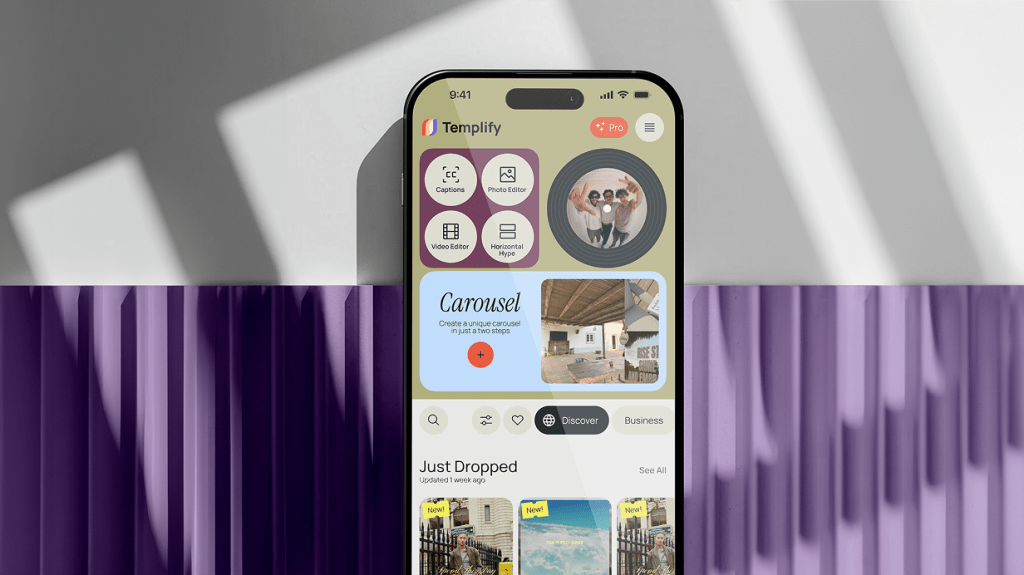
How Templify automated nearly half of customer support and cut tooling costs by 89%.
AI-native customer support and automated subscription management. 89% reduction in tooling costs, 48% of tickets fully automated, and 5.900% faster response times.


Hiring an experienced partner changes what happens in the first month, and how much of it you have to redo later.
A scoped team starts within two weeks, so your first release date is set early.
Assembling and ramping an in-house team usually pushes that same launch back by months.
One scoped engagement replaces hiring, tooling and management, so development costs stay visible from the start.
Running that team in-house adds cost at every stage, and most of it arrives unplanned.
Cloud-native, multi-tenant architecture goes in on day one, so the platform holds up when usage grows.
Platforms built without that expertise usually need re-architecting once real traffic arrives, which stalls the roadmap.
Handing off the technical build frees you to work on product-market fit and growth.
Managing a development team in-house pulls your attention into daily decisions the business needs from you elsewhere.
Dedicated UX and onboarding design gives new users a reason to come back after the first week.
SaaS products built without that input often struggle to gain users, and struggle harder to keep them.
The team that built the product keeps extending it, so releases after launch move at the same pace.
Technical debt from an unstructured build slows every future release, and the slowdown compounds.
Idea validation, technical feasibility, roadmap
User-flow mapping, interactive prototypes, design systems
Multi-tenant architecture, data isolation, API-first backend, scalability planning
Full-stack build, front-end & back-end engineering, third-party integrations, subscription/billing
Cloud setup, CI/CD, cost optimization, migration for existing products with minimal downtime
Automated and manual testing, security hardening, go-live, post-launch maintenance and iteration
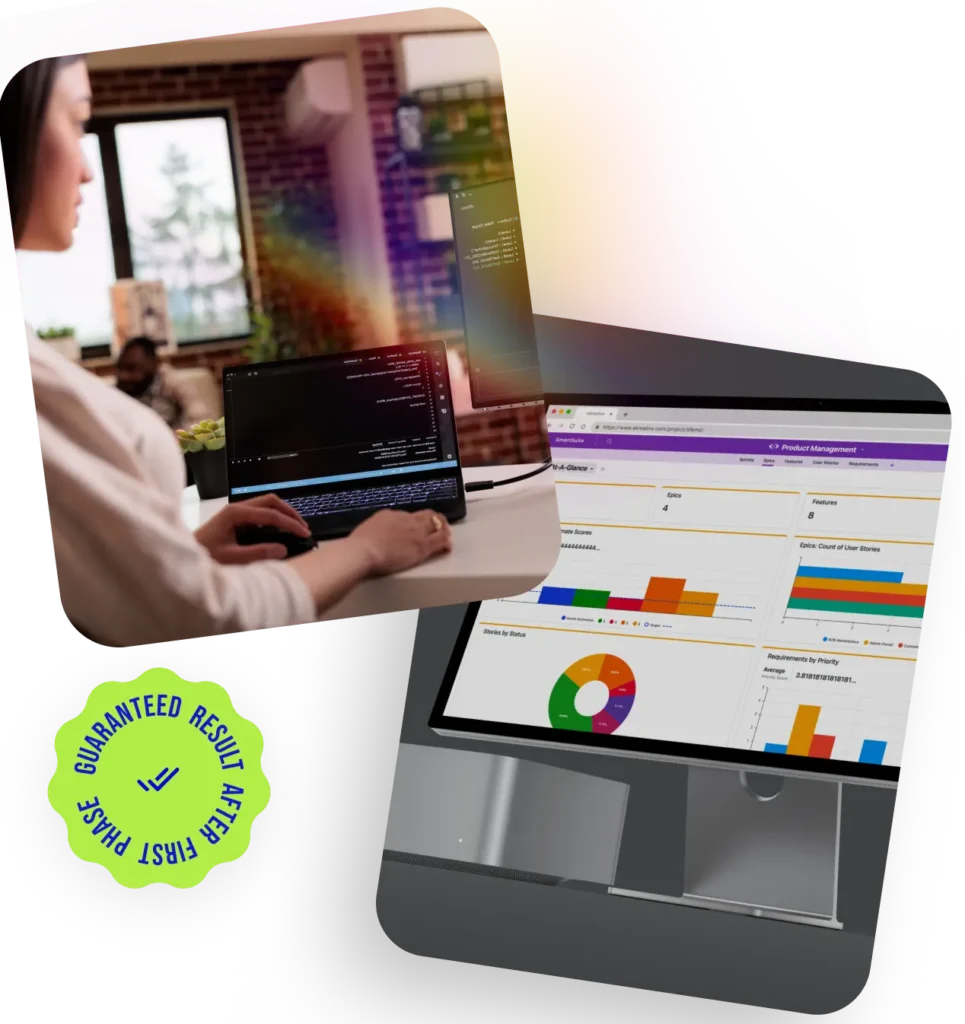
Custom SaaS product development at Ekreative covers 250+ products: AI-native SaaS applications, operations platforms, a regulated healthcare software product. The results are measurable: one client cut tooling costs by 89%, another automated 48% of support tickets. Part of the portfolio is under NDA, so this is a selection.
AI-native customer support and automated subscription management. 89% reduction in tooling costs, 48% of tickets fully automated, and 5.900% faster response times.
AI orchestration across customer support, content moderation, and ops. Same business outcomes, 58% smaller team, fully documented handover.
AI-augmented engineering practice across architecture, code generation, testing, and review. Faster delivery on a smaller team, in a regulated healthcare environment.
Engineering velocity overhaul on a legacy codebase: AI-augmented development workflow, automated QA, and refactored architecture. Real AI in the build process — not in the pitch deck.
Planning to build a SaaS product? Send us the idea, the stage it is at, and your target timeline.
Someone senior comes back within one business day with a scoped response, whether you are building something new or adding some enhancements to a platform you already run. No obligation. No long call needed to get a first answer.
ESTIMATED SENIOR ENGINEERING TIME THAT GOES INTO SCOPING YOUR PROJECT. YOURS AT NO COST
As a B2B SaaS development company, we start every SaaS product development engagement by learning how your sector actually operates.
Patient portals, scheduling, records platforms built for clinical workflows and privacy requirements.
Storefronts, checkout, inventory and order systems that hold up during demand peaks.
Equipment catalogues, chairside product selectors, clinic ordering flows and practice-system integrations.
Habit tracking, coaching, subscription content and connected-device apps for wellness providers.
Payments, lending, reporting and compliance-heavy platforms for regulated financial services.
Policy administration, claims workflows, underwriting portals and broker-facing quoting tools.
Production tracking, stage-by-stage reporting, CRM and warehouse integrations, and payment gateways that reconcile.
Energy management, billing, metering and field service platforms built for utility operations and regulatory requirements.
Don’t see your
industry?
Our stack spans back-end, front-end, mobile and cloud, so most teams find their own preferred technologies here before the first call.
Due diligence comes down to two questions: who will actually be on your project,
and what happens to the code after launch.
We think like product owners. Every sprint ties back to a business goal and a real user need, so the backlog answers to your metrics and to the people who actually use the product.
Our SaaS architectures are cloud-native and multi-tenant from the first commit. We have scaled a SaaS solution past 100k active users, and the same groundwork carries platforms through their next growth stage, typically without a rewrite.
We work as an AI-native software development company: agentic tooling reads undocumented code, writes missing tests and proposes refactors, with a senior engineer signing off before anything reaches users. Clean code practices, automated testing and CI/CD on every build.
You pick the model. Fixed-scope delivery covers a defined product or feature set end to end; an embedded team puts senior engineers inside your product organization within two to four weeks.
No template goes out twice. Architecture and compliance requirements get shaped around how your sector actually operates, which is why a regulated healthcare build looks different from a consumer one.
One team carries SaaS product development services from discovery to post-launch support. That means a single point of accountability and no gaps where work passes between a design agency and whoever inherits the code after launch.
From startups to enterprise teams — Ekreative helps companies ship better software faster, without sacrificing quality or reliability.
Why the difference between “more agents” and “better thinking” quietly determines whether your AI investment compounds, or stalls out The…
In the dynamic and ever-evolving landscape of healthcare, software projects play a pivotal role in enhancing patient care, streamlining operations,…
In today’s fast-paced world, the healthcare industry is constantly evolving, driven by technological advancements that have the potential to transform…
You get a written timeline before committing. A focused first release of the SaaS product runs six to twelve weeks. Mid-sized SaaS builds run three to six months. Large platforms and full modernization take six to twelve.
Scope, team size, and timeline all shape the final cost. Our free audit helps us understand the high-level scope, outline a realistic approach, and give you a rough estimate and timeline. It includes around $5–8k worth of senior engineering time and results in a documented scope that’s yours to keep, whether you choose to work with us or not.
Yes, if the product is new and the market unproven. An MVP reaches real users while changing direction is still cheap. For a platform already in production, the work usually starts with modernization instead.
Speed, and who carries the risk. To deliver B2B SaaS development services, we put a scoped team on your product within days, whereas hiring and ramping in-house runs to months. Development companies also bring patterns from platforms that have already scaled.
The same team keeps building. Monitoring, support and iteration on usage data are part of the engagement, not a separate contract. Client relationships here average five years or more.
Two ways to start. Both get a real response from someone senior — within one business day.
Book a 30-min product review
Pick a time directly on our calendar. You'll talk with a senior strategist and walk out with a written feasibility scope — even if you don't hire us.
Send us your roadmap first
Tell us what you're working on. Our sales lead, with technical input from one of our architects will review it and reply within 1 business day with concrete next steps — not a sales sequence.