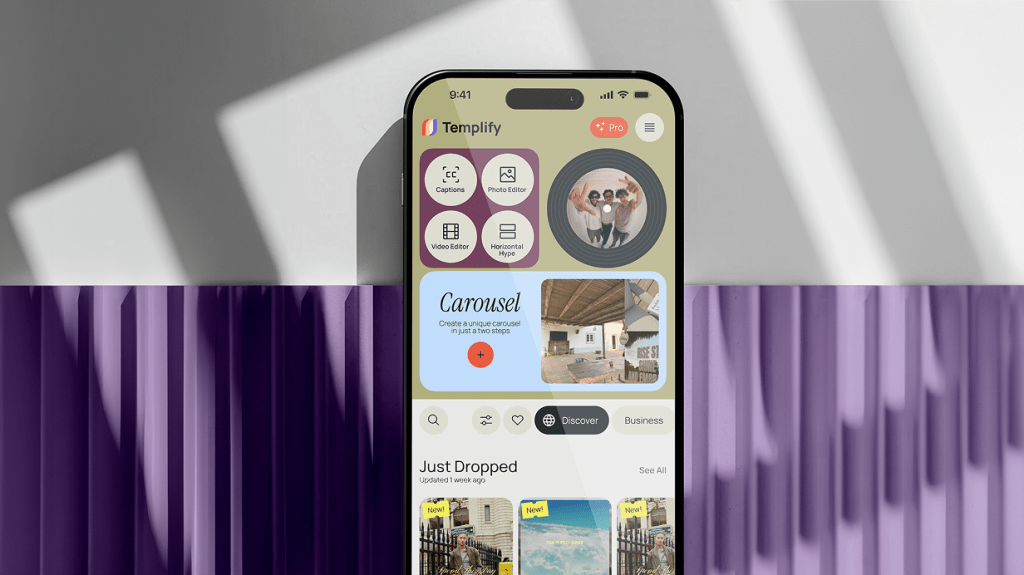
How Templify automated nearly half of customer support and cut tooling costs by 89%.
AI-native customer support and automated subscription management. 89% reduction in tooling costs, 48% of tickets fully automated, and 5.900% faster response times.


Native development suits complex, performance-critical products. Building against the platform’s own framework gives full access to hardware, background processing, and everything the operating system exposes.
One codebase, both platforms. A single codebase built in React Native or Flutter reaches iOS and Android faster and cheaper, without feeling like a compromise to users.
We build iOS apps to Apple’s design and review standards, so submissions clear App Store review without a scramble for fixes in the final week.
Android runs on thousands of device and OS combinations. We build for that spread, so your Android app behaves the same on a flagship and a three-year-old phone.
Already have an app? We rebuild, re-architect, or port it, keeping what works and replacing what blocks you, so you are not starting from zero.
After launch, we handle OS compatibility as new versions ship, fix bugs found in production, and iterate on what real usage data shows.
An app changes who owns the relationship. Mobile application development is how companies stop renting customer attention and start holding it.
You reach customers through push notifications on their own device, whenever you have something worth saying.
Without an app, you rent that access from search rankings, ad platforms, and browser habits.
You match the experience customers already get elsewhere, because most of your competitors already have an app.
Without an app, every comparison starts with the thing you do not offer.
You open channels you control directly, from in-app purchases and subscriptions to loyalty features.
Without an app, those channels stay on someone else’s platform, under someone else’s rules.
An app opens instantly where a web page reloads, works offline, and uses the native device features people expect.
Without an app, user experience depends on connection quality and a browser tab that closes.
Your icon sits on the home screen and stays visible daily, without buying attention like an ad.
Without an app, you are visible only when someone remembers to search for you.
Ekreative has been building apps since 2009, across numerous products delivered to market through its mobile app development services. We build apps for healthcare, e-commerce, and finance, from early-stage MVPs to products with years of history behind them. Some client work sits under NDA, so what follows is a selection.
AI-native customer support and automated subscription management. 89% reduction in tooling costs, 48% of tickets fully automated, and 5.900% faster response times.
AI orchestration across customer support, content moderation, and ops. Same business outcomes, 58% smaller team, fully documented handover.
AI-augmented engineering practice across architecture, code generation, testing, and review. Faster delivery on a smaller team, in a regulated healthcare environment.
Engineering velocity overhaul on a legacy codebase: AI-augmented development workflow, automated QA, and refactored architecture. Real AI in the build process — not in the pitch deck.
Tell us what you have in mind: which mobile platforms it needs to run on, and when you want it live. You will hear back within one business day.
The first answer comes in writing: what the development process would look like, a rough scope, and the questions worth settling early. No call required, no obligation to continue.
Time for a written first response from a senior engineer, whether you hire us or not.
We cover regulated, high-volume, and consumer-facing sectors with mobile app development services, and each shapes the build differently.
Patient-facing apps where records access and telehealth meet strict data storage rules.
Shopping apps built for checkout speed, loyalty, and push-driven return visits.
Ordering and catalogue apps reps and practices use to reorder equipment and consumables.
Habit and activity apps designed for daily use across months of retention.
Banking apps where authentication and transaction integrity outrank every other requirement.
Claims apps that turn photos and documents into a trackable case file.
Floor and field apps that work offline and sync once connection returns.
Technician apps for job assignment, task completion and shift reporting, built to work offline.
Don’t see your industry?
Every sector shapes the build differently. Tell us about yours and we will say how we would approach it.
Our teams work across native and cross-platform: Kotlin on Android, React Native and Flutter where one codebase makes sense, and whichever language and tooling the project actually calls for.
Before signing, teams ask the same due-diligence questions about custom mobile app development services. Here are the short answers.
iOS and Android work goes to app developers who build on that platform every day. Each has its own UI conventions and its own way of spending battery and compute. A generalist discovers those differences in production.
Design and development follow App Store and Google Play guidelines from the first sprint. Permissions, data handling, and payment flows are settled early, so review is a step in the plan, not a late surprise.
Every short cycle ends with an installable build you run on your own phone. You see progress and can change direction mid-project, instead of waiting for a reveal at launch.
Load times, battery use, and offline behavior are requirements from day one. A developer who has to debug a slow screen after launch costs more than one who profiles it during the build.
Some teams want a full product team. Others want custom mobile app development services alongside their own engineers. The engagement matches your stage instead of one fixed model for everyone.
Design, backend, APIs, QA, launch, and support sit under one team, so there are no handoffs between vendors. Your own engineers keep their productivity, because nobody spends their week briefing another vendor.
From startups to enterprise teams — Ekreative helps companies ship better software faster, without sacrificing quality or reliability.
Why the difference between “more agents” and “better thinking” quietly determines whether your AI investment compounds, or stalls out The…
In the dynamic and ever-evolving landscape of healthcare, software projects play a pivotal role in enhancing patient care, streamlining operations,…
In today’s fast-paced world, the healthcare industry is constantly evolving, driven by technological advancements that have the potential to transform…
Timelines depend on scope, and we put ours in writing before you commit. A focused first release moves quickly; a product with payments, offline sync, and integrations takes longer. Discovery is what turns that into a date.
We price mobile app development services by scope, the number of platforms, and how much design the app needs. A single-platform MVP costs a fraction of a two-platform product with its own backend. We quote a range after discovery, never over the phone.
It depends on what the app has to do. Native code — Swift on iOS, Kotlin on Android — suits performance-heavy products that lean on device hardware.Cross-platform development covers both stores from one codebase, typically faster to ship.
Every sprint ends with a build you can install and use. Working with a mobile app development service provider should not feel like waiting for a reveal, so you also talk to the engineers directly, not through a relay.
Yes, maintenance is part of our mobile app development services. OS updates and store policy changes keep arriving after launch, and production bugs surface only once real people use the app.
Two ways to start. Both get a real response from someone senior — within one business day.
Book a 30-min product review
Pick a time directly on our calendar. You'll talk with a senior strategist and walk out with a written feasibility scope — even if you don't hire us.
Send us your roadmap first
Tell us what you're working on. Our sales lead, with technical input from one of our architects will review it and reply within 1 business day with concrete next steps — not a sales sequence.